When travellers think of Spain, their minds often wander to flamenco dancers, bullfighting arenas, vibrant festivals, and endless sunshine. While Spain is full of regions worth exploring, Andalucía in southern Spain is, in my opinion, the most captivating. It’s a land of contrasts—ancient Moorish palaces, whitewashed villages perched on hills, golden beaches along the Mediterranean, and cities that breathe with life.
During my journey through Andalucía, I explored Granada, Córdoba, Malaga, and Marbella, each offering its own charm. Together, they form a mosaic of Spain’s rich past and vibrant present. For any traveller seeking history, relaxation, food, and culture, Andalucía is a dream.
Table of Contents
Country Snapshot: Spain
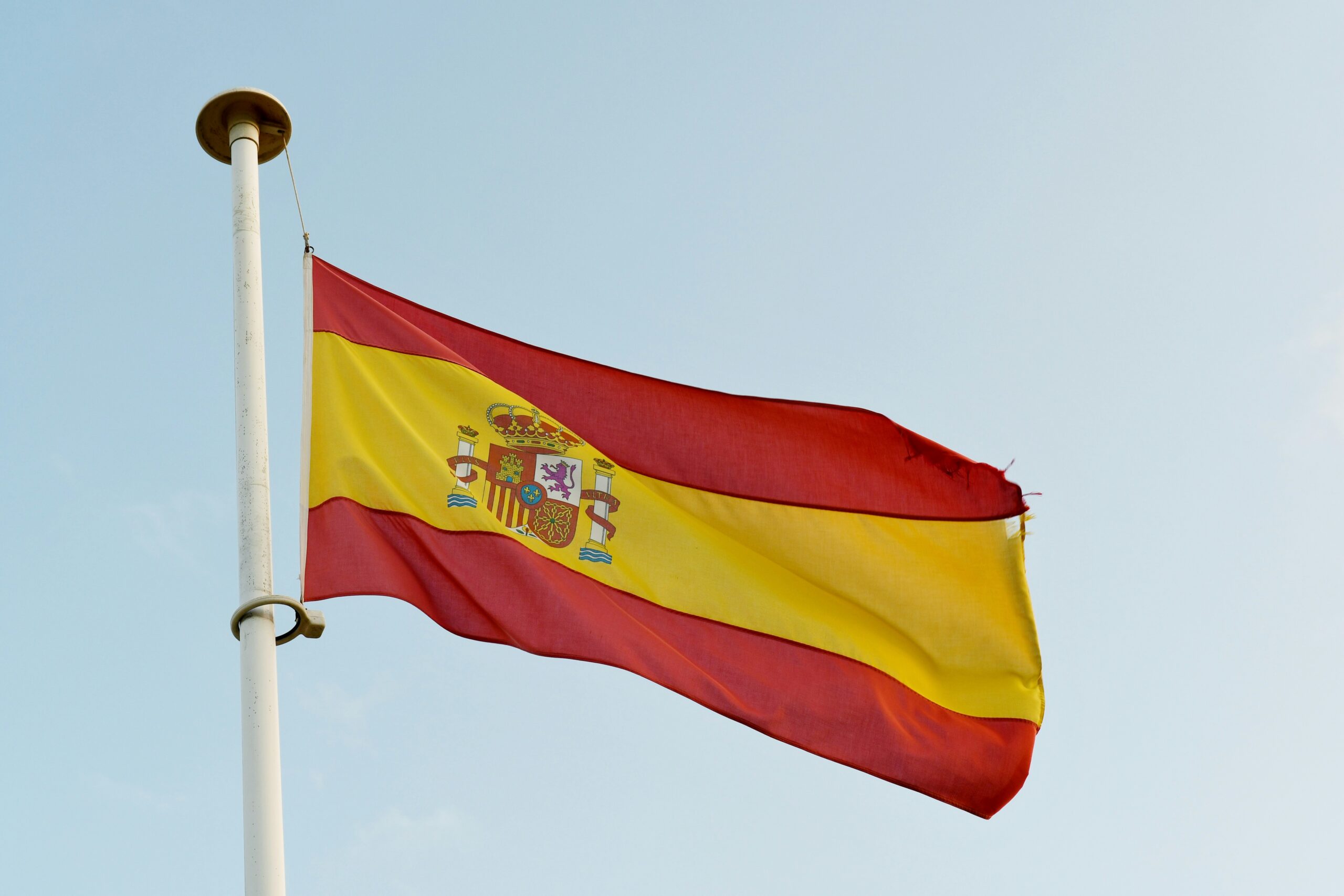
Country: Spain (Kingdom of Spain)
Capital City: Madrid
Major Cities: Barcelona, Seville, Valencia, Malaga, Zaragoza, Bilbao
Population: ~47 million
Official Language: Spanish (Castilian). In some regions, Catalan, Basque, and Galician are also spoken.
Currency: Euro (€)
Religion: Predominantly Roman Catholic, though modern Spain is highly secular.
Geography: Located on the Iberian Peninsula, sharing borders with Portugal, France, Andorra, and Gibraltar. Surrounded by the Mediterranean Sea and Atlantic Ocean.
Getting There: Spain is well connected by international airports, including Madrid, Barcelona, Malaga, and Seville and has number of flag carriers including Iberia.
High-speed trains (AVE) link major cities, while buses and budget airlines make travel easy within Europe.
First Impressions
Landing in southern Spain, I immediately noticed the contrast with northern Europe. The skies seemed clearer, the air warmer, and life moved at a slower, more relaxed pace. Locals embraced the famous siesta culture, where afternoons are reserved for rest and evenings come alive with food, music, and socializing. Siesta refers to a traditional midday nap or rest period, typically taken after the midday meal. Historically, it served as a break from work to avoid the intense heat and was a fundamental part of the daily routine, allowing for lunch, rest, and personal activities before resuming work in the late afternoon
Walking through narrow alleys lined with orange trees, I could feel the mix of cultures that shaped this land—Romans, Visigoths, Moors, and Christians. The result is a region unlike any other in Europe, where Islamic architecture stands alongside Gothic cathedrals, and traditional flamenco music echoes in taverns.
Granada: The Jewel of Andalucía
If I had to choose one Spanish city that left the deepest impression, it would be Granada. Nestled at the foot of the Sierra Nevada Mountains, it feels like a living fairytale.
The Alhambra
The Alhambra is a vast palace and fortress complex in Granada, Spain, renowned as the greatest surviving example of medieval Islamic architecture and a UNESCO World Heritage site. Originally a small fortress, it became the royal residence of the Nasrid Dynasty, the last Muslim rulers in Spain, in the 13th century. The complex is famous for its stunning Islamic architecture, including the Nasrid Palaces, the fortress-like Alcazaba, and the beautiful Generalife gardens. Its name, meaning “the red one,” refers to the colour of its walls and without doubt, it is one of the most visited monuments in Spain. Its delicate stucco, intricate Arabic calligraphy, and serene courtyards reflect the peak of Moorish art.
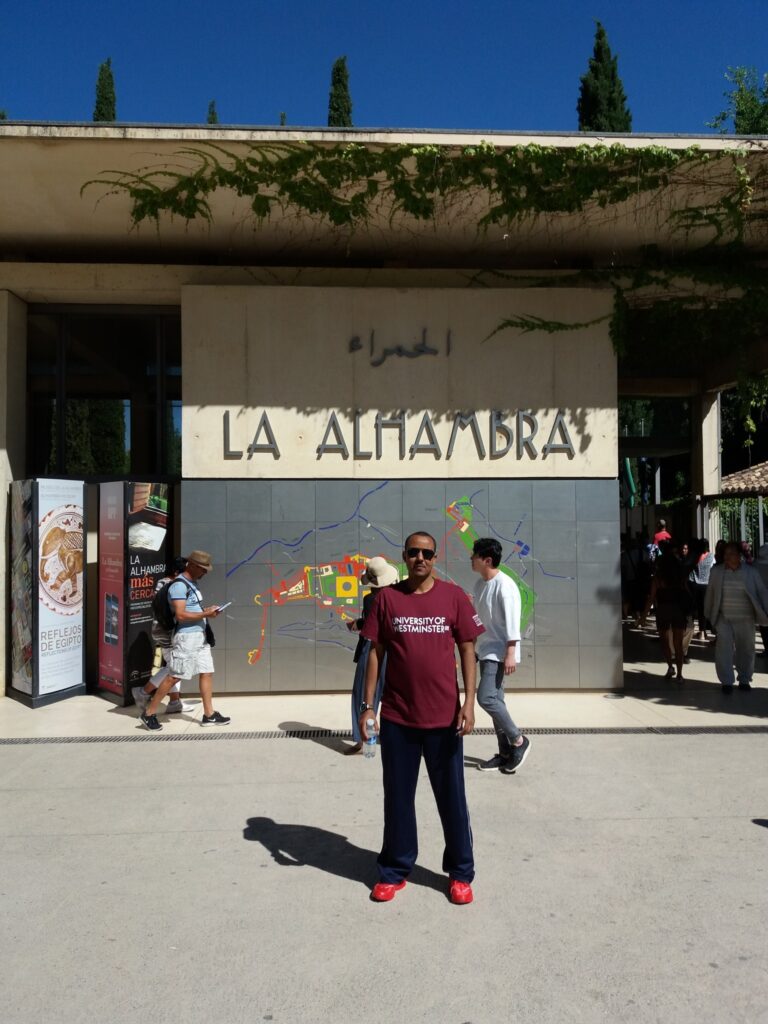
The Generalife Gardens, with flowing fountains and blooming flowers, are a haven of peace.
I recommend booking tickets early in advance—only a limited number of visitors are allowed each day. Arrive early to watch the sunrise over the Alhambra; it’s magical.
Albaicín Quarter
Wandering through Albaicín, the old Moorish neighbourhood, is like stepping back in time. Narrow cobbled streets, whitewashed houses, and hidden squares create a maze where every corner reveals a new view of the Alhambra. From Mirador de San Nicolás, the view of the Alhambra against the backdrop of the Sierra Nevada at sunset is unforgettable.
Flamenco in Granada
Granada is also famous for its flamenco culture. In the Sacromonte caves, passionate performances take place late at night. The music, clapping, and soulful dances capture the very essence of Andalusian spirit.
Córdoba: A City of Cultures
Córdoba, once the capital of Al-Andalus during the Islamic Golden Age, was one of the most advanced cities in medieval Europe. It boasts a long history as a Roman city and a powerful capital under the Moorish Caliphate, becoming a centre of learning and culture.
Today, it is a vibrant city known for its well-preserved historic architecture, particularly the Mezquita-Cathedral, a World Heritage site. Visitors can explore its Roman past, the famed Jewish Quarter, and the unique patios, enjoying its culture and hospitality.
Walking through its streets, I felt the echoes of scholars, poets, and philosophers who once lived here.
The Mezquita (Mosque-Cathedral)
The Mosque-Cathedral of Córdoba (Mezquita-Catedral) is a unique and significant World Heritage Site in Spain, built originally as a mosque by the Umayyad ruler ʿAbd ar-Raḥmān I in 784–786 AD and expanded over the centuries. It features a distinctive forest of red-and-white striped arches and was one of the largest sacred buildings in the Islamic world before a cathedral was built inside it after the Reconquista, making it a singular example of both Islamic and Christian architecture. It’s one of the most unique religious buildings I’ve ever visited.
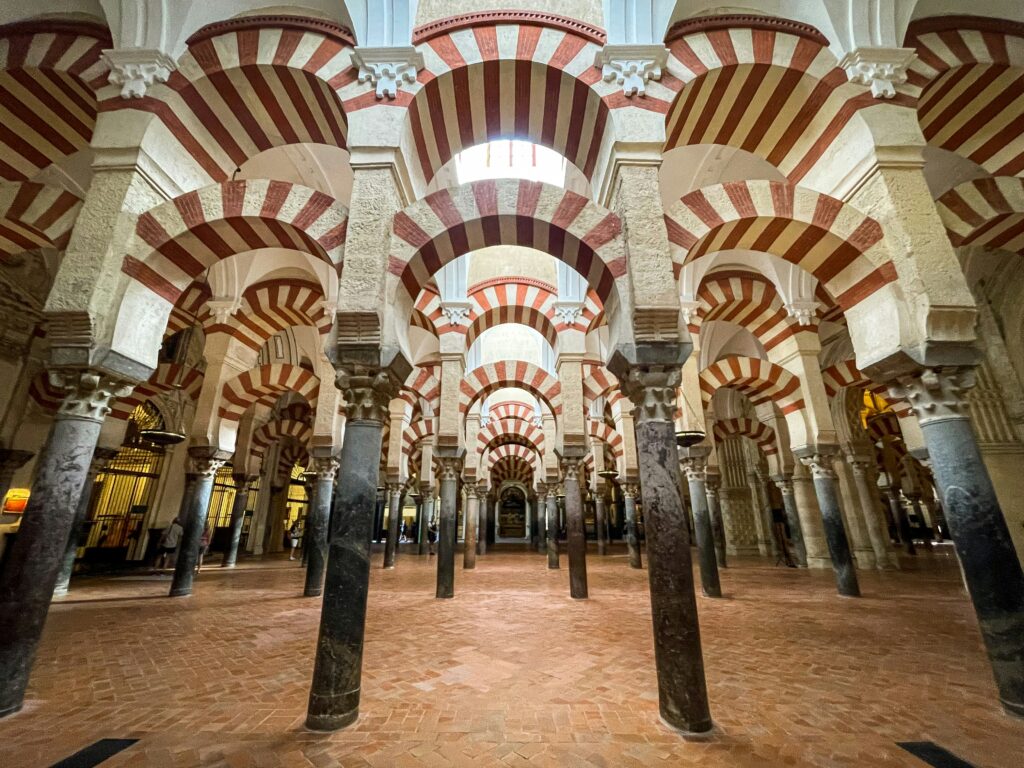
Jewish Quarter & Synagogue
Córdoba’s Jewish Quarter is a labyrinth of narrow streets with flower-filled patios and hidden courtyards. The old synagogue, dating back to the 14th century, is a reminder of the once-thriving Jewish community.
Patios of Córdoba
If visiting in May, don’t miss the Patios Festival, when locals open their beautifully decorated courtyards to the public. Flowers, fountains, and colourful tiles create a feast for the senses.
Málaga: The Gateway to the Costa del Sol
Málaga boasts nearly 3,000 years of history, founded by Phoenicians as a trading hub and later ruled by Carthaginians, Romans, and Moors before becoming part of Spain in 1492. Today, Málaga is a vibrant city and a popular tourist destination, known for its sunny climate, beaches, a rich cultural heritage including the Picasso Museum, historic landmarks like the Alcazaba and the Roman Theatre, and a lively atmosphere
Málaga airport is the main gateway and hub for southern Spain, but the city itself is worth exploring.

Picasso’s Hometown: Málaga is the birthplace of Pablo Picasso, and the Picasso Museum offers a fascinating collection of his works. The house where he was born is also open to visitors.
Alcazaba and Gibralfaro Castle: The Alcazaba, a Moorish fortress overlooking the city, is one of the best-preserved in Spain. Just above it, the Gibralfaro Castle offers sweeping views of the coastline and harbor.
Beaches and Seafront: Málaga boasts lovely beaches such as La Malagueta, where locals and tourists alike enjoy sunbathing and seafood. Along the promenade, I tried espeto de sardinas—sardines grilled on a stick over an open fire, a local specialty.
Marbella: Luxury on the Mediterranean
While Granada and Córdoba take you deep into history, Marbella introduces you to modern luxury. Marbella, Spain, transitioned from Paleolithic settlements and a significant 19th-century steel industry to a thriving international tourist and luxury resort destination. Historically, it boasts Roman villas, Visigoth monuments, and an ancient Arab wall, with the name “Marbella” itself deriving from the Arabic for “shiny stone”.
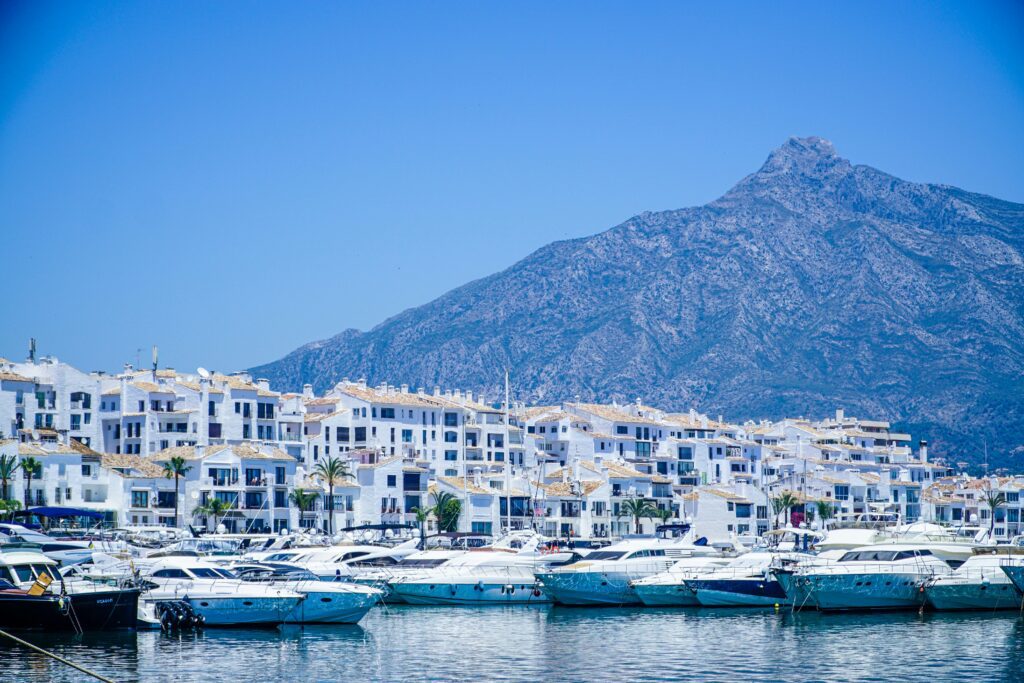
Today, it’s a glamorous global hub known for its stunning beaches, upscale infrastructure including the Puerto Banús marina, its glamorous “Golden Mile” with luxury hotels and shops, and high-end restaurants and nightclubs.
Old Town Charm: Marbella’s Old Town is full of cobblestone streets, orange trees, and lively squares like Plaza de los Naranjos. It feels intimate and charming.
Puerto Banús: This glamorous marina is lined with luxury yachts, high-end boutiques, and vibrant nightlife. It’s a place to people-watch, enjoy fresh seafood, or simply stroll along the harbor.
Beaches and Resorts: Marbella is known for its stunning beaches and luxury resorts. Whether you want quiet relaxation or beach clubs with music and energy, Marbella has it all.
Festivals and Events in Andalucía
Semana Santa (Holy Week): Held in March or April, with elaborate processions of religious floats through the streets. Cities like Seville, Málaga, and Granada are especially famous for this.
Feria de Abril (April Fair, Seville): A week of flamenco dancing, horse parades, traditional costumes, and endless food.
Córdoba Patio Festival (May): Courtyards across the city open their doors, decorated with flowers.
Flamenco Festivals: Held throughout the year, but summer months bring major events across Andalucía.
Three Kings Day (January 6): A colourful celebration with parades and sweets, marking the end of Christmas festivities.
https://www.spain.info/en/destination/malaga
Practical Travel Tips
Best Time to Visit: Spring (April–June) and Autumn (September–October) are ideal, with pleasant weather. Summers can be extremely hot, especially in inland cities like Córdoba and Seville.
Transport: Andalucía is well connected by trains and buses. High-speed AVE trains link Córdoba, Málaga, and Madrid in a few hours. Renting a car gives more freedom to explore small villages.
Currency: Euro (€). Credit cards are widely accepted, but carry cash for small shops and cafes.
Language: Spanish is the main language. English is spoken in tourist areas, but learning a few Spanish phrases goes a long way.
Food: Tapas culture is strong here. Try gazpacho (cold tomato soup), jamón ibérico (cured ham), and churros with hot chocolate. Seafood is a must along the coast.
Cultural Etiquette: Spaniards eat late—dinner often starts after 9 pm. Tipping is not obligatory but rounding up the bill is appreciated.
Beyond the Main Cities
Seville: The capital of Andalucía, famous for its grand cathedral, the Giralda tower, and the Alcázar Palace. Following the collapse of the Caliphate, Seville (known as Ishbiliya) rose to prominence as the capital of its own wealthy taifa kingdom under the Abbadid dynasty from 1023 to 1091.
In 1248, Seville fell to the Christian king Ferdinand III. Many Muslim inhabitants were displaced, and the city’s great mosque was consecrated as a cathedral.
Today, Muslim influence remained visible, however, particularly in the city’s gardens and the construction of the Alcázar palace, which blended Islamic and Christian design
My Reflections
Travelling through Andalucía was like traveling through different worlds within the same region. Granada mesmerized me with Moorish splendor, Córdoba inspired me with its cultural blending, Malaga impressed me with its art and coastal beauty, while Marbella showcased modern luxury by the sea.
What ties all of Andalucía together is the warmth of its people and their passion for life. Locals love to share their food, music, and traditions. Whether enjoying tapas in a small bar, watching a flamenco dancer pour her soul into her movements, or simply strolling through sunlit plazas, I felt welcomed everywhere.
Andalucía is not just a region to visit—it is a place to feel, to savor, and to remember. The combination of history, sunshine, and Spanish hospitality makes it one of Europe’s most enchanting destinations.
For any traveller, a journey through southern Spain is not complete without losing yourself in the magic of Andalucía.